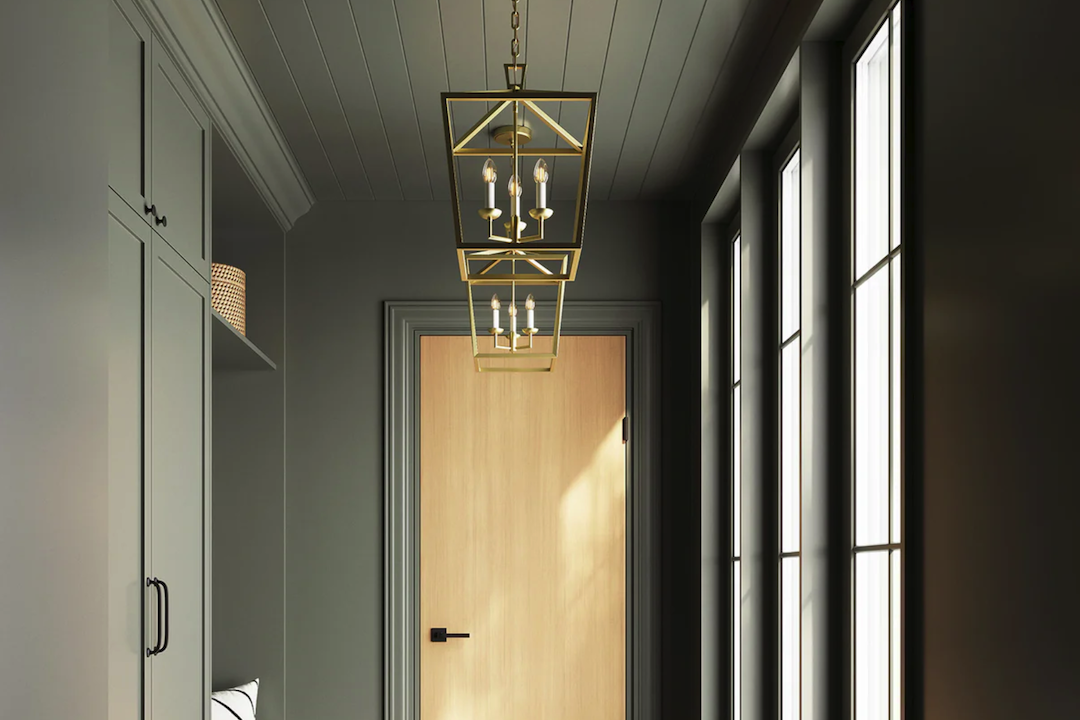
When designing an entryway, often described as the “first impression” of a home, careful consideration is given to every element. Among these, lighting plays a pivotal role, not merely as a functional necessity to illuminate the space, but as a design statement that can dictate the mood and aesthetic of the entire dwelling. The Brass-Accented Minimalist Entryway Light represents a specific approach to this design challenge, combining key stylistic and material characteristics to achieve a particular effect. This article will explore the historical context, design principles, material science, and practical applications of this lighting archetype, offering insights into its enduring appeal and functional benefits within contemporary interior design.
The evolution of entryway lighting Misls mirrors the broader progression of human habitation and technological advancements. Early homes relied on natural light during the day, with fire and later candles providing illumination after dusk. Entryways were often dimly lit, serving primarily as transitional spaces. The advent of gas lighting in the 19th century and electricity in the early 20th century revolutionized home illumination, allowing for more consistent and controlled light sources. This technological leap enabled designers to consider lighting as an integral part of interior aesthetics, rather than a mere necessity.
The Rise of Modernism and Minimalism
The 20th century witnessed the emergence of Modernism, a design philosophy that eschewed ornamentation in favor of clean lines, functional forms, and an emphasis on materials. This movement, gaining traction after World War I, laid the groundwork for Minimalism, a further refinement where “less is more” became the guiding principle. Minimalism, particularly in the latter half of the 20th century, sought to reduce design to its essential elements, focusing on geometry, absence of clutter, and monochromatic palettes.
Brass in Design History
Brass, an alloy primarily of copper and zinc, boasts a rich history in decorative arts and functional items. Its malleability, durability, and lustrous appearance made it a favored material for a range of applications, from ancient weaponry and coinage to Renaissance scientific instruments and Victorian-era hardware. In the 20th century, brass saw renewed popularity during the Art Deco period, where its warm, reflective qualities complemented the opulent and geometric designs of the era. Its appeal as an accent material, as opposed to a primary structural component, is rooted in its ability to introduce warmth and visual interest without overwhelming a minimalist aesthetic.
Design Principles of Minimalist Entryway Lighting
Minimalist design, at its core, prioritizes function and clarity. An entryway light adhering to these principles is characterized by its simplicity of form, unobtrusive presence, and efficient illumination. It avoids superfluous decoration, elaborate detailing, and excessive complexity.
Form Follows Function
This architectural and industrial design principle, popularized by Louis Sullivan, dictates that the shape of a building or object should be primarily based upon its intended function or purpose. In the context of a minimalist entryway light, this means the fixture’s design should be directly related to its role in providing light and contributing to the overall spatial harmony. Unnecessary embellishments are absent, allowing the light source itself and its immediate housing to be the focal points of design.
Emphasis on Clean Lines and Geometry
Minimalist design often utilizes geometric shapes – circles, squares, rectangles, and cylinders – as fundamental building blocks. This reliance on basic, unadorned forms contributes to a sense of order and tranquility. A minimalist entryway light will typically feature straightforward contours and precise angles, avoiding organic or flowing shapes that might introduce visual complexity. The absence of intricate patterns or textures allows the inherent beauty of the chosen materials to come to the forefront.
Strategic Use of Negative Space
Negative space, the empty area surrounding and between elements, is a crucial component of minimalist design. It is not merely an absence of content but an active element that contributes to the composition’s balance and clarity. In an entryway light, strategic use of negative space can create a sense of lightness and openness, preventing the fixture from appearing too heavy or imposing, particularly in smaller entryways. This can be achieved through open-cage designs or fixtures that project light without a dense physical mass.
The Role of Brass Accents in Minimalist Design
The inclusion of brass as an accent in a minimalist design serves a specific aesthetic and functional purpose. While minimalism generally shies away from overt decoration, carefully selected accents can elevate the design, providing a point of interest and visual warmth without compromising the core principles of simplicity.
Introducing Warmth and Contrast
Minimalist interiors often feature cool tones, such as white, gray, and black. While these colors contribute to a clean and serene environment, they can sometimes feel sterile or uninviting. Brass, with its warm, golden hue, acts as a counterpoint to these cooler tones, injecting a subtle richness and inviting glow. This contrast is vital; the brass accent acts as a visual anchor, drawing the eye without dominating the space.
Adding a Touch of Sophistication
Brass has historical associations with luxury and craftsmanship. Its incorporation into a minimalist scheme can elevate the overall aesthetic, lending a sense of understated sophistication. Unlike highly polished chrome or stainless steel, which can appear stark, brass often develops a patina over time, adding character and a subtle vintage appeal that can soften the austerity of minimalist forms. This patina, a result of oxidation, can be a desirable characteristic, suggesting age and quality.
Durability and Craftsmanship
Beyond aesthetics, brass offers pragmatic advantages. It is a durable material, resistant to corrosion, making it suitable for long-term use. Its workability allows for precise manufacturing, contributing to the perception of quality and craftsmanship often associated with well-designed minimalist objects. The tactile quality of brass can also contribute to the overall sensory experience of the entryway.
Material Science and Construction
The construction of a Brass-Accented Minimalist Entryway Light involves a careful selection and combination of materials, each contributing to the fixture’s aesthetic and functional performance. Understanding these materials is key to appreciating the design choices.
Primary Body Materials
The primary body of a minimalist entryway light will typically be constructed from materials that complement the brass accent while maintaining a clean, uncluttered appearance. Common choices include:
- Matte Black or White Powder-Coated Steel/Aluminum: These finishes provide a neutral backdrop, allowing the brass to stand out. Powder coating offers a durable, uniform finish that resists chipping and fading, and its matte quality reduces glare, contributing to a subdued aesthetic.
- Frosted or Opal Glass: When glass is incorporated, it is often frosted or opalized to diffuse light evenly, preventing harsh glares and creating a soft, ambient glow. Glass, being non-reactive and easy to clean, is a practical choice for light diffusers.
- Solid Wood (Limited Use): While less common for the main fixture due to its potential for visual weight, some minimalist designs might incorporate small wooden elements, often in light, neutral tones, to introduce an organic texture that contrasts with the metallic elements.
Brass Components and Finishes
The specific brass components can vary widely, encompassing structural elements, decorative caps, screws, or finials. The finish of the brass is also a critical design decision:
- Polished Brass: Offers a highly reflective, mirror-like surface. This finish provides the most dramatic contrast and shine, making the brass accent a prominent feature. It requires more frequent cleaning to maintain its luster.
- Satin/Brushed Brass: Features a subtle, matte sheen due to fine brushing. This finish is less reflective and more understated, often preferred in minimalist designs where a softer gleam is desired. It tends to show fingerprints less readily than polished brass.
- Aged/Antiqued Brass: Achieved through chemical treatments or natural oxidation, this finish presents a darker, less uniform appearance, often with brown or black undertones. It evokes a sense of history and warmth, fitting well into minimalist designs that seek to incorporate subtle vintage elements or a softer, less stark metallic presence.
Light Source Types
The choice of light source directly impacts the fixture’s performance and energy efficiency. Contemporary minimalist designs almost exclusively utilize LED (Light Emitting Diode) technology.
- LED (Light Emitting Diode): LEDs are highly efficient, long-lasting, and offer a range of color temperatures. Their small size allows for greater design flexibility, enabling designers to create slim and unobtrusive fixtures. They also produce minimal heat, enhancing safety and fixture longevity. The selection of bulb type (e.g., globe, Edison, tubular) will further refine the aesthetic and light distribution.
Practical Applications and Placement
The strategic placement of a Brass-Accented Minimalist Entryway Light is paramount to its effectiveness. The entryway is a high-traffic area, serving as a conduit between the external world and the private domain of the home. The lighting here should be both functional and aesthetically pleasing.
Illumination Requirements
An entryway light needs to provide sufficient illumination for practical tasks, such as removing coats, greeting guests, and navigating the space. This generally translates to a need for ambient light, distributed broadly across the area. Dimmable fixtures are often desirable, allowing the user to adjust the light intensity based on time of day or occasion, transitioning from bright practical lighting to a softer, more inviting glow.
Addressing Space Constraints
Entryways vary significantly in size and ceiling height. A minimalist fixture is particularly well-suited for smaller entryways or those with lower ceilings, where bulky or elaborate fixtures could overwhelm the space. Its unobtrusive design prevents visual clutter, making the area feel larger and more open. For higher ceilings, a minimalist pendant or semi-flush mount can still maintain proportion without dominating the vertical space.
Complementary Design Elements
The Brass-Accented Minimalist Entryway Light should ideally integrate seamlessly with other design elements in the entryway. This might include:
- Wall Colors: Neutral wall colors (whites, grays, muted blues) provide an ideal canvas for the brass accent to stand out without competing for attention.
- Furniture: Simple, functional furniture pieces such as a console table or a bench with clean lines will echo the minimalist aesthetic of the light fixture.
- Mirrors: A well-placed mirror can amplify the light and create a sense of depth, further enhancing the effect of the entryway light. The brass accent can be repeated in the mirror’s frame for cohesion.
- Flooring: The flooring choice often sets the foundational tone. Materials like hardwood, concrete, or large-format tiles with minimal grout lines contribute to the clean aesthetic.
Maintenance and Longevity
Like any fixture, proper maintenance ensures the longevity and continued aesthetic appeal of a Brass-Accented Minimalist Entryway Light.
Cleaning Brass Accents
The cleaning regimen for brass components depends on the chosen finish:
- Polished Brass: Requires regular dusting with a soft, dry cloth. Chemical cleaners should be used sparingly and only if specifically formulated for polished brass, as harsh abrasives can scratch the surface. A microfiber cloth can maintain its shine.
- Satin/Brushed Brass: Can be cleaned with a damp cloth and mild soap. A gentle buffing with a soft, dry cloth can restore its subtle luster.
- Aged/Antiqued Brass: Less prone to showing smudges or fingerprints. Dusting is usually sufficient. Avoid harsh cleaners that could strip the applied patina.
Cleaning Other Components
The primary body of the fixture (e.g., powder-coated metal, glass) can generally be cleaned with a soft, damp cloth and mild, non-abrasive cleaners. For glass diffusers, a streak-free glass cleaner can be used. It is crucial to ensure the fixture is de-energized (switched off at the breaker) before any cleaning is undertaken.
Longevity of LED Sources
LED light sources have a significantly longer lifespan compared to incandescent or fluorescent bulbs, often rated for tens of thousands of hours. This reduces the frequency of bulb replacement, contributing to lower maintenance requirements over time. When an LED module eventually fails, it might require replacing the entire fixture or a specialized LED driver, depending on the fixture’s design.
Conclusion
The Brass-Accented Minimalist Entryway Light is more than a mere source of illumination; it is a carefully curated element designed to establish the tone for an entire home. By adhering to the principles of minimalism – simplicity, functionality, and clean lines – and strategically incorporating the warmth and sophistication of brass, this type of fixture offers a refined approach to entryway design. It serves as a testament to the idea that thoughtful restraint in design can achieve a profound impact, creating a welcoming and aesthetically coherent threshold. As design trends evolve, the timeless appeal of well-executed minimalism, particularly when balanced with the subtle richness of materials like brass, ensures its continued relevance in contemporary interiors.